
The Lok Sabha witnessed chaotic scenes as opposition members protested the introduction of three draft laws, leading to torn bills, sloganeering, and adjournments.

The Supreme Court has stated it will intervene if there is mass exclusion in the special intensive revision of electoral rolls in Bihar, emphasizing the Election Commission's role as a constitutional authority.

The judge further underlined that the minorities of the country had not only joined the mainstream but also were an important facet of it.

Will negotiate with FSDL to arrive at mutually agreeable measures: AIFF after SC hearing

The Supreme Court on Monday said citizens must know the value of the right of freedom of speech and expression, and exercise self restraint as it mulled guidelines to regulate offensive social media posts.
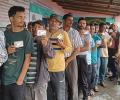
The Supreme Court has directed the Election Commission of India (ECI) to publish details of deleted names from the voters list in Bihar, along with reasons for non-inclusion, to enhance transparency in the special intensive revision (SIR) of the electoral roll.
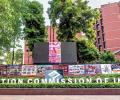
The Supreme Court on Monday granted protection from arrest to psephologist Sanjay Kumar in connection with two FIRs lodged by the Election Commission of India accusing him of spreading misinformation over Maharashtra's electoral rolls through posts on social media.

The Bombay High Court clarified that it did not order the closure of pigeon-feeding spots (Kabutarkhanas) in Mumbai, but only refrained from staying the municipal corporation's closure order. The court suggested a committee of experts to study the issue, emphasizing the importance of human health.
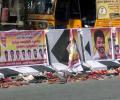
'Karur could still impact Jana Nayagan's box-office success if Vijay and the TVK do not get their act together,' points out N Sathiya Moorthy.

The Uttarakhand high court has asked two top officials of the state to find out whether an officer who has no knowledge of English can effectively control an executive position after an additional district magistrate responded in Hindi during the hearing of a public interest litigation (PIL).

'The moment they fall foul of the party in power, they become unsafe. Then nobody can guarantee their safety.'
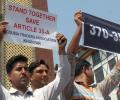
Several petitions challenging the Centre's decision to abrogate the provisions of Article 370 and the Jammu and Kashmir Reorganisation Act, 2019, which split J-K into two Union Territories Jammu and Kashmir, and Ladakh were referred to a constitution bench in 2019.

Tata Steel is in the process of filing a curative petition in the Supreme Court in connection with the apex court ruling which said that states have the power to levy cess on mining and mineral-use activities. The petition by the steel manufacturing firm is aimed at seeking remedy to the order, passed by a 9-judge Constitution Bench of the Supreme Court on July 25. However, Tata Steel's managing director and chief executive officer T V Narendran told Business Standard that there was no demand note on the firm.

The Centre on Wednesday told the Supreme Court that nobody can claim right over government land and it is legally empowered to reclaim properties which are declared waqf by using the waqf by user principle.

Congress leader Rahul Gandhi has criticized the government's decision to appoint Gyanesh Kumar as the new Chief Election Commissioner (CEC) in the middle of the night, arguing that it is "disrespectful" and "discourteous" given the ongoing Supreme Court challenge to the selection process. Gandhi presented a dissent note to the selection committee, stating that the process violates the Supreme Court order and undermines the integrity of the electoral process.

The Supreme Court has adjourned pleas challenging the appointments of the chief election commissioner (CEC) and election commissioners (ECs) under the 2023 law. The court indicated the matter would be listed after the Holi festival break due to a paucity of time. Petitioners, including the NGO Association for Democratic Reforms, argued for an urgent hearing, emphasizing the importance of the issue and the potential impact on democratic processes. The appointment of the new CEC and ECs under the 2023 law, which excludes the Chief Justice of India from the selection panel, has been a point of contention, with petitioners alleging it undermines the independence of the election commission.

The Supreme Court is scheduled to hear a plea on August 8 seeking directions to the Centre for the restoration of statehood to Jammu and Kashmir. The plea highlights concerns about the delay and its impact on democratic rights and development.

National Conference leader Mohammed Akbar Lone on Tuesday filed an affidavit in the Supreme Court reiterating his oath as Lok Sabha MP, saying he will preserve and uphold the Constitution and protect the country's territorial integrity, an undertaking that irked the Centre which claimed it added "insult to injury to the nation".
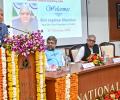
Vice President Jagdeep Dhankhar has questioned the Chief Justice of India's involvement in executive appointments, specifically citing the selection of the CBI director. He believes this practice undermines democratic principles and calls for revisiting the existing norms. Dhankhar also raised concerns about the "doctrine of basic structure", suggesting it has a debatable jurisprudential basis. He emphasized the importance of each institution operating within its constitutional boundaries and highlighted the need for coordinated autonomy. The vice president also discussed the need for a balanced approach to judicial review and the importance of judges focusing on judgments rather than other forms of expression. He stressed the need to revisit the current state of affairs to restore the judiciary's sublimity.
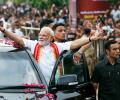
'Non-BJP state governments and their leaders, navigating today's political landscape, know well they have no clue what awaits around the corner.' 'The chances of charges pressed and oneself getting parked in custody play out on an uneven playing field,' points out Shyam G Menon.
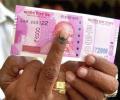
Following is the chronology of events in the case related to validity of the electoral bonds scheme, a mode of funding to political parties, in which a five-judge Constitution bench of the Supreme Court on Thursday delivered a landmark verdict annulling it.

On February 1, grappling with the intractable issue of the AMU's minority status, the top court said the 1981 amendment to the AMU Act, which effectively accorded it a minority status, only did a "half-hearted job" and did not restore the institution the position it had prior to 1951.

The Supreme Court on Friday referred to a five-judge Constitution bench the dispute between the Centre and the Delhi government over control of services in the national capital.

The Supreme Court of India has censured BJP MP Nishikant Dubey for his remarks against the judiciary, stating that his comments "tend to scandalize and lower the authority of the Supreme Court of India." The court dismissed a contempt petition against Dubey but issued a scathing order criticizing his remarks, which included accusations that the court was "taking the country towards anarchy" and that Chief Justice Sanjiv Khanna was "responsible for the civil wars taking place in the country." The court deemed Dubey's statements "highly irresponsible" and indicative of an attempt to "incite religious wars." The order highlighted the importance of maintaining public confidence in the judiciary and condemned attempts to undermine its authority.

Acting on the Supreme Court's direction, Haryana's Director General of Police Shatrujeet Kapur has constituted a Special Investigation Team (SIT) to investigate two FIRs against Ashoka University associate professor Ali Khan Mahmudabad. The SIT, headed by Additional Director General of Police (Crime) Mamta Singh, will include Superintendent of Police (Karnal) Ganga Ram Punia and Superintendent of Police (STF, Gurugram) Vikrant Bhushan. The SIT will expeditiously complete the investigation and submit a report at the earliest. Mahmudabad was arrested on May 18 for his social media posts on Operation Sindoor, which were alleged to have endangered the sovereignty and integrity of the country. The Supreme Court granted him interim bail on Thursday, but refused to stay the investigation.

The Supreme Court on Friday refused to entertain a fresh plea challenging constitutional validity of the Waqf (Amendment) Act, 2025.
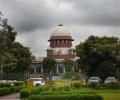
The top court said an accused has a right to voluntarily undergo a narco-analysis test at an appropriate stage.
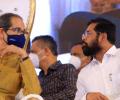
The Supreme Court said on Wednesday the issues related to the Maharashtra political crisis, triggered by the differences in the Shiv Sena, are "tough" constitutional questions to decide as they have "very serious" ramifications for the polity.
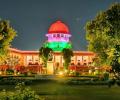
Article 363 bars the interference of courts in any disputes which may arise from certain treaties, agreements, covenants, sanad, engagements, etc., executed between a princely state and the government of India.

The Congress party has accused Union Minister Nitin Gadkari of conflict of interest, alleging his sons' companies have benefited from the government's ethanol blending policy. The BJP has rejected the allegations.

Simplifying GST rates, removing exemptions, easing disputes, and speeding up refunds can boost investment in India and offer the best reply to Trump's tariffs, observes V S Krishnan, former member, Central Board of Indirect Taxes and Customs.

As soon as one of the pleas came up for hearing on Friday, Solicitor General Tushar Mehta, appearing for the Centre, objected and said there can't be an "endless" filing of pleas challenging the Act.

The Supreme Court of India has directed changes in digital know your customer (KYC) guidelines for persons with disability and acid attack survivors, citing the right to digital access as an intrinsic component of the right to life under Article 21 of the Constitution. The court found that existing KYC procedures, which require visual tasks such as head movements and facial positioning, pose significant challenges for these groups, preventing them from accessing essential services like bank accounts and welfare schemes. The court emphasized the importance of bridging the digital divide and ensuring universal accessibility to digital services for all citizens.
The Supreme Court is scheduled to consider in-chambers on Tuesday a batch of pleas seeking review of its judgment which held that states are constitutionally empowered to make sub-classifications within the Scheduled Castes, which form a socially heterogeneous class, for granting reservation.
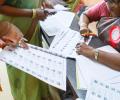
The Supreme Court has agreed to hear petitions challenging the Election Commission's decision to revise electoral rolls in Bihar. The hearing is scheduled for July 10.
The Supreme Court on Monday directed uniform pension benefits for all retired high court judges, irrespective of their mode of appointment or tenure, saying "one rank one pension has to be the norm in respect of a constitutional office".
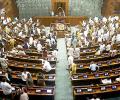
The Monsoon session of Parliament concluded after facing disruptions and protests over the revision of electoral rolls in Bihar. Despite the disruptions, the government managed to pass key legislations.
It was reacting to lawyer Mathews Nedumpara's email to the top court in which he claimed the apex court has been hearing only constitution bench matters, which have no public interest involved, and not the cases of ordinary citizens.

The Supreme Court of India dismissed a plea seeking the inclusion of Vinayak Damodar Savarkar's name in the Emblems and Names (Prevention of Improper Use) Act, 1950. The petitioner, appearing in person, argued for the inclusion based on his 30 years of research and claimed a need to establish facts about Savarkar in a legally verifiable manner. However, the court found no violation of fundamental rights and suggested the petitioner make a representation to the Union of India for curriculum inclusion. This dismissal follows the court's earlier reprimand of Congress leader Rahul Gandhi for his remarks on Savarkar at a rally in Maharashtra, although criminal proceedings against Gandhi were stayed.

In a landmark verdict, the Supreme court fixed a timeline for Governor to act on bills passed by the state legislature as it pulled up Tamil Nadu Governor R N Ravi for reserving 10 bills for President's consideration, saying it was against the constitutional provisions.
 © 2026 Rediff.com - Advertise with us - Disclaimer - Privacy Policy - Sitemap - Feedback - About us - Terms of use - Grievances